Why Your Hair Can Pass A Hair Analysis But Still Fail A Strand Test
Why Your Hair Can Pass A Hair Analysis But Still Fail A Strand Test
A professional hair analysis can reveal valuable information about the condition of your hair. A strand test provides a different kind of evidence: it shows how a small section of your hair responds to the colour process being considered.
These assessments support one another, but they are not interchangeable.
Your hair may produce an encouraging result during a digital analysis and still respond poorly during a strand test. This does not mean that either assessment was wrong. It means they examined different aspects of your hair—and the strand test uncovered information that could not safely be ignored.
What Does A Hair Analysis Tell Us?
At THE TRUTH IN COLOUR®, our SalonLab® Smart Digital Hair Analyzer helps us examine your hair more closely than we could through sight and touch alone.
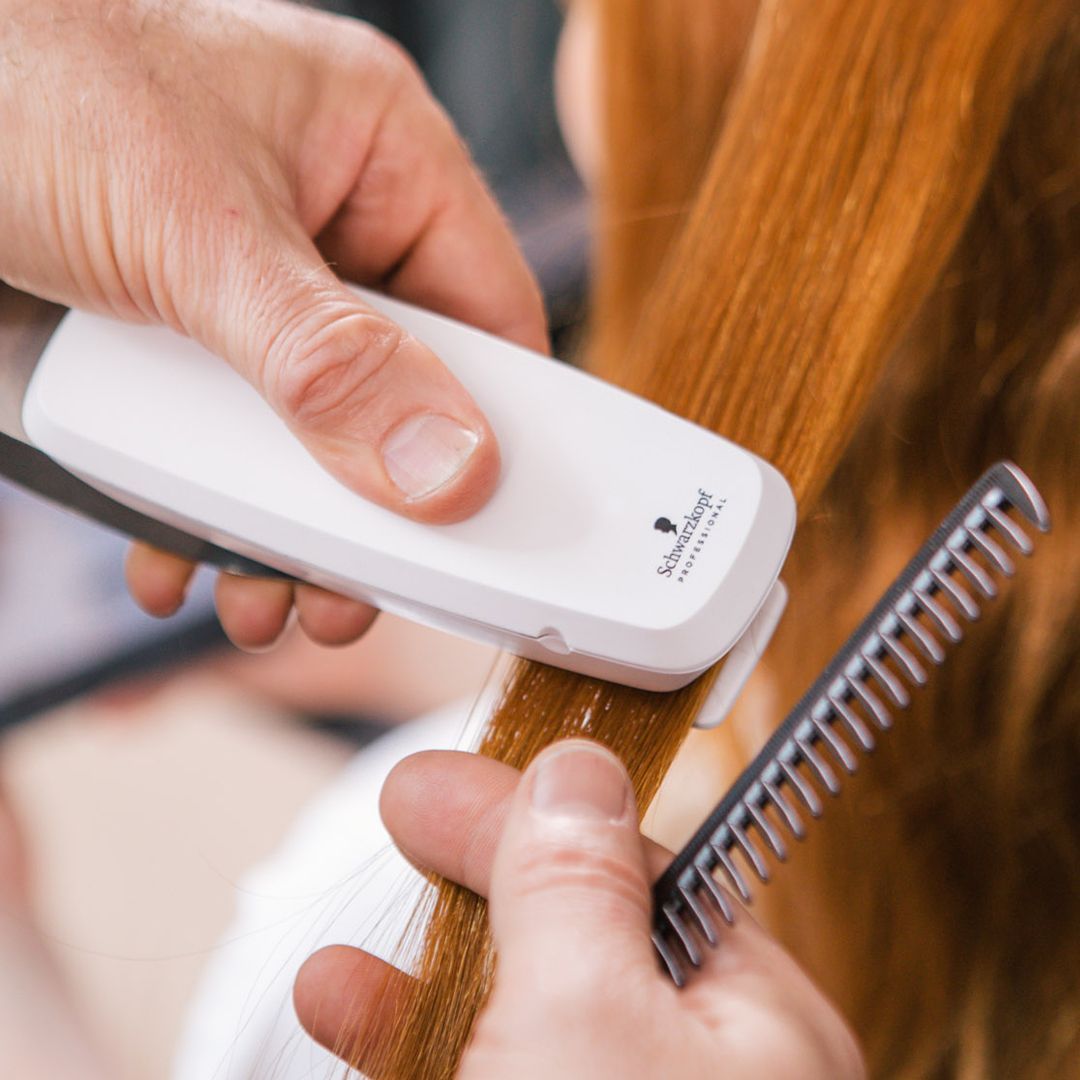
The results contribute valuable information about your hair’s condition and help us make more informed recommendations. We consider them alongside:
- Your previous colour and chemical history
- The way your hair looks and feels
- Its elasticity and porosity
- Your current homecare routine
- The result you would like to achieve
- The chemical process that may be required
A hair analysis is therefore an important part of the wider assessment. However, it is not a guarantee that every colour or lightening process will be suitable.
It gives us information about the hair as it is presented at the consultation. It does not fully predict every reaction that may occur when a particular product, strength or technique is applied.
What Does A Strand Test Tell Us?
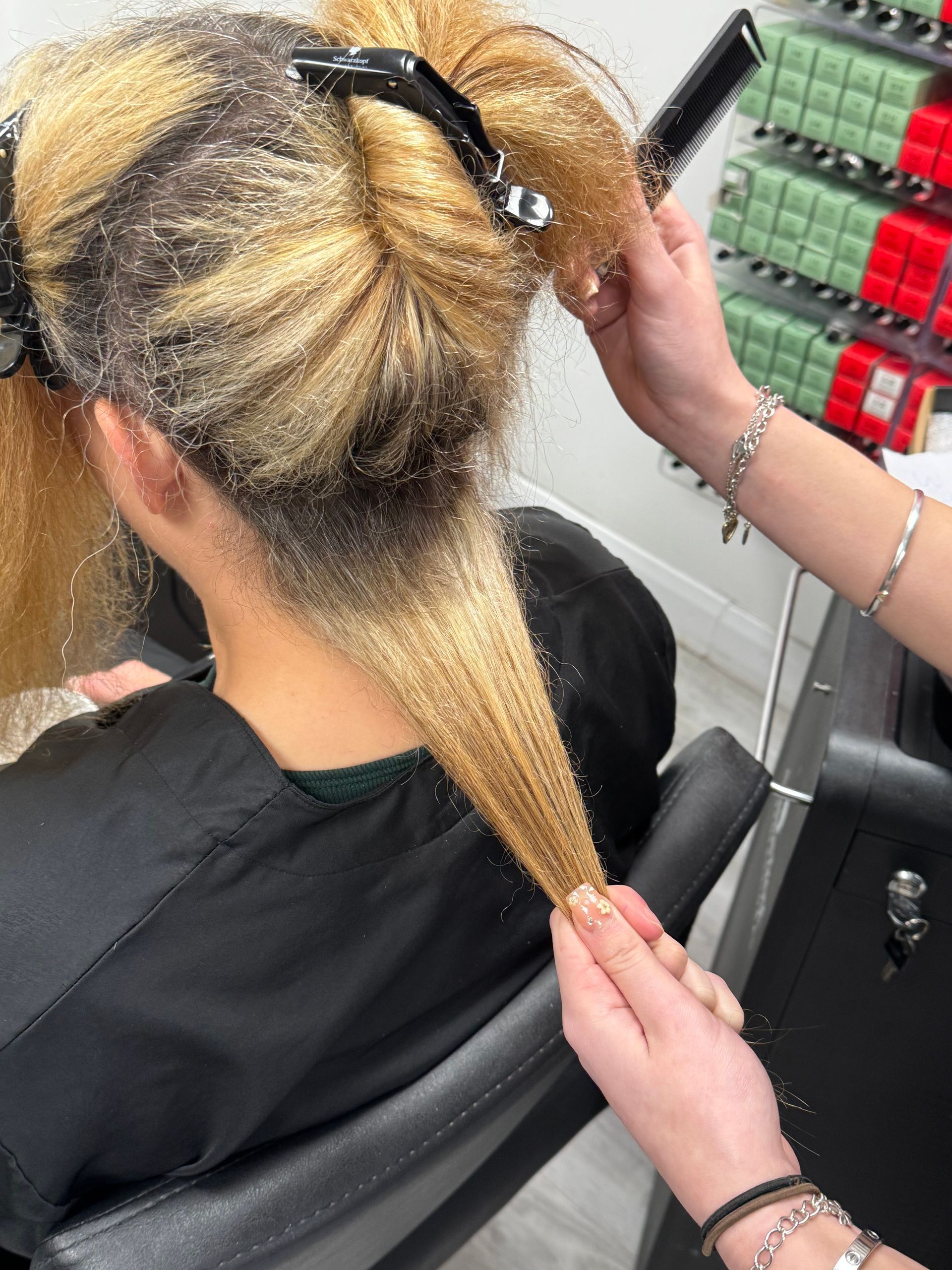
A strand test involves applying the proposed colour or lightening process to a small, carefully selected section of hair before committing to the complete service.
This allows us to observe how that particular hair responds in practice.
Depending on the intended service, we may assess:
- Whether the hair lifts
- How evenly it lifts
- Which underlying tones are revealed
- Whether artificial colour begins to move
- How the hair’s elasticity changes
- Whether the strand retains enough strength
- Whether the likely result supports the client’s goal
- Whether the proposed process can be carried out safely
This is why a strand test is more than a preview of the colour. It is also a practical suitability and safety assessment.
You can learn more about this part of our process in Why We Sometimes Recommend A Strand Test.
Why Can The Two Results Be Different?
A digital analysis and a strand test are asking different questions.
The hair analysis helps us assess the condition of the hair. The strand test asks what happens when that hair is exposed to the specific chemical process needed to pursue your goal.
Hair can appear healthy, feel reasonably strong and produce an encouraging analysis result while still containing a complicated colour history. Previous box dye, lightener, permanent colour, heat damage, smoothing treatments or overlapping applications may affect different areas of the hair in different ways.
Some of that history may not be immediately visible.
The hair may also behave differently through its length. The roots, mid-lengths and ends may each have a different condition, colour history and level of resistance. One section may lift successfully while another becomes fragile, develops excessive elasticity or produces an uneven result.
A positive hair analysis therefore gives us useful information—but it cannot override an unsuitable response during the strand test.
Does Passing A Hair Analysis Mean Colour Is Safe?
We should be careful with the word “pass.”
A hair analysis does not issue blanket approval for any colour service. Its findings apply to the measurements and observations made during that assessment.
Suitability still depends on:
- What has previously been applied to the hair
- Which service is being considered
- How much lift or colour movement is required
- The condition of different areas
- The client’s expectations
- The result of any necessary testing
A reading that appears encouraging may support further investigation. It does not mean that we should proceed regardless of the remaining evidence.
This is also why we measure hair before we promise results. A professional consultation is not based on a single score, photograph or conversation. We bring several pieces of information together before making a recommendation.
What Does A Failed Strand Test Look Like?
A strand test does not have to snap in order to be considered unsuccessful.
We may decide that the proposed process is unsuitable if the test strand:
- Becomes excessively stretchy
- Loses strength or structure
- Feels significantly rougher or weaker
- Lifts unevenly
- Reveals unexpected bands or tones
- Does not reach a suitable level
- Produces a result too far removed from the intended goal
- Suggests that the complete service would create an unacceptable level of risk
Sometimes the hair remains intact but does not produce a result that can be repeated evenly across the whole head. That information is just as important.
Proceeding because the strand did not visibly break would ignore the wider purpose of the test.
Is A Failed Strand Test Bad News?
It may be disappointing, particularly when you have been looking forward to changing your hair, but a failed strand test is not a wasted appointment or an obstacle invented by your colourist.
It is useful evidence discovered before the complete service—not after preventable damage has occurred.
The result may lead us to recommend:
- A more gradual colour plan
- A different shade or technique
- Less lightening
- Removing some compromised length
- A period of appropriate haircare
- Further testing at a later stage
- Maintaining the current colour temporarily
- Avoiding the proposed chemical service altogether
The correct recommendation depends on the individual hair and the result of the test. Haircare may improve how the hair feels and support its condition, but it cannot guarantee that a future strand test will succeed or reverse every effect of previous chemical processing.
Why Do We Follow The Most Cautious Result?
When different parts of an assessment appear to conflict, we follow the evidence that identifies the greatest risk.
An encouraging hair analysis cannot make an unsuccessful strand test safe. Equally, a successful test on one section does not automatically prove that every area of the hair will respond identically.
Our responsibility is not to search for the answer that allows us to proceed. It is to interpret all the available evidence and make the most appropriate professional recommendation.
Sometimes that recommendation changes the plan. Occasionally, it means saying that the requested service should not go ahead.
That decision is not a judgement about you or your goal. It is a judgement about what your hair has shown us at that time.
Testing Helps Us Plan—Not Promise
Professional assessments reduce uncertainty, but they do not remove it entirely. Hair is not uniform, and chemical history is not always completely visible or predictable.
The SalonLab® analysis helps us understand more about the hair in front of us. A strand test helps us observe how it responds to the proposed process. Your consultation, hair history and our physical assessment provide further context.
Together, these elements allow us to make a better-informed plan.
The aim is not simply to achieve a colour as quickly as possible. It is to determine whether the journey towards that colour is suitable, realistic and responsible for your individual hair.
Begin With A Professional Consultation
If you are considering a significant colour change, correcting previous colour or lightening hair with a complex history, begin with a professional consultation.
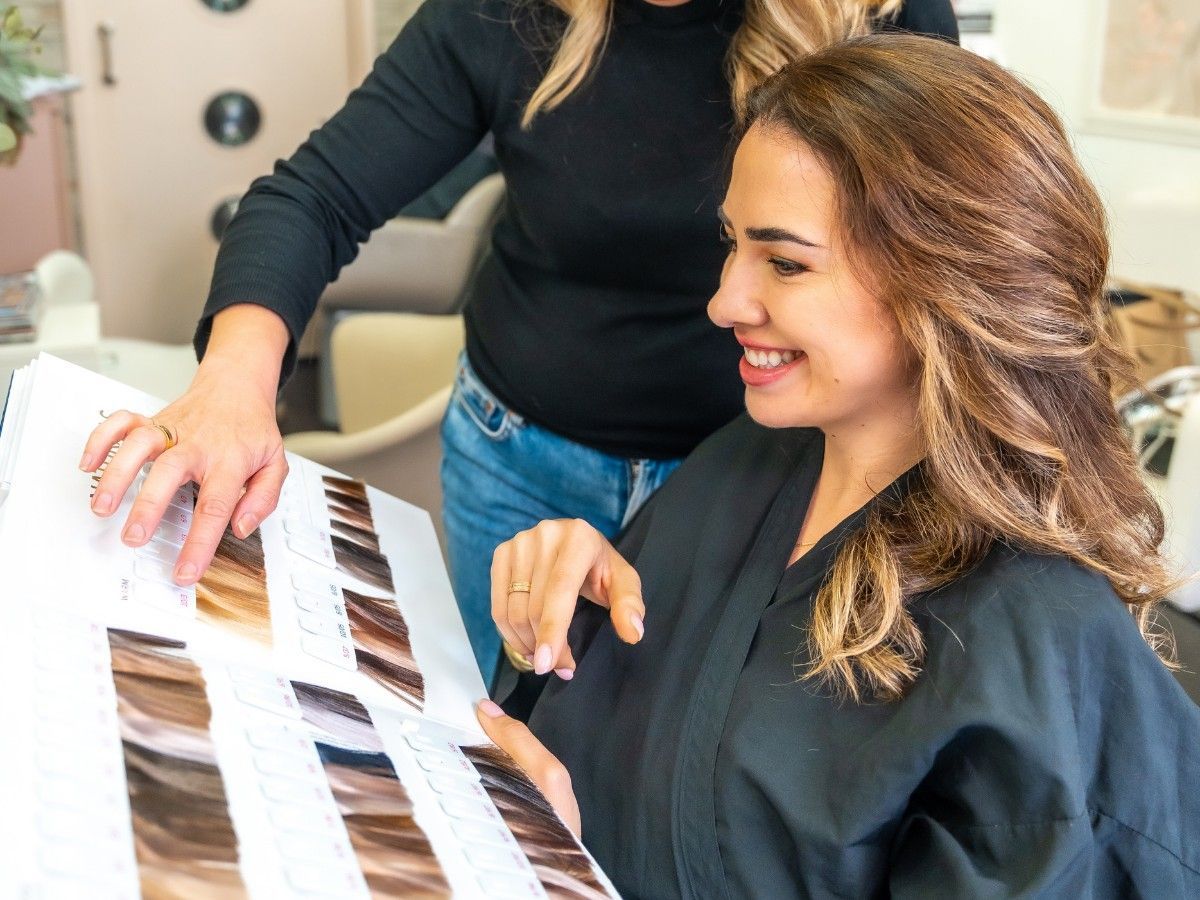
We will assess your hair, discuss its history and your expectations, and determine whether analysis or strand testing is required before recommending the next step.