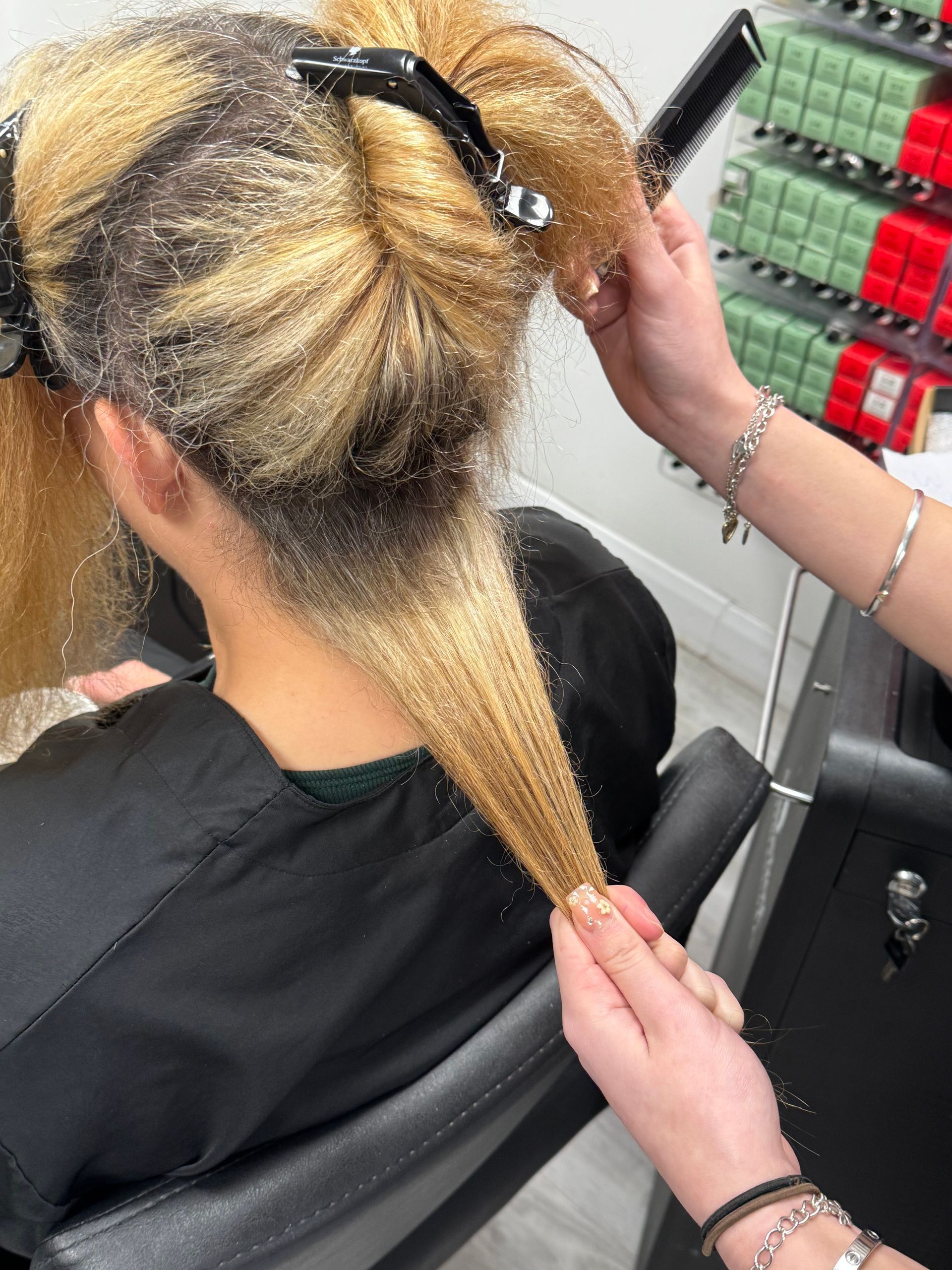
Why We Measure Hair Before We Promise Results
Updated 7 October 2026
Before booking colour, correction or a treatment, you want to understand what result is possible, what it may cost and how many appointments it could take.
Those are reasonable questions. To answer them meaningfully, we first need to understand your hair’s starting point.
That is why we combine consultation, professional assessment, SalonLab analysis and testing where appropriate before agreeing on a plan.
What We Need to Understand First
Your reference photographs help us understand your preferred result. Your hair history helps us assess how we might work towards it.
During your consultation, we discuss:
- your natural colour and current shade
- previous colour, lightening and chemical treatments
- differences between your roots, mid-lengths and ends
- any breakage or changes you have noticed
- your homecare and styling routine
- your preferred result, maintenance expectations and budget
These details help us identify what needs closer assessment before recommending a service.
What Measurement Adds to the Consultation
SalonLab analysis provides additional information about aspects of your hair’s internal condition.
We consider that information alongside what we can see and feel, your colour history and your goals. It supports our professional judgement when discussing services and care.
A score does not tell us everything about your hair. It does not guarantee that a particular colour result is achievable or establish exactly how every section will respond to a formulation.
For more about the difference between appearance and condition, read why healthy-looking hair isn’t always healthy.
Why Testing May Change the Plan
Where needed, strand testing helps us observe how a selected section of hair responds to a proposed colour formulation.
The findings may support the original plan, suggest a different approach or indicate that we should not proceed with the proposed service.
This is why an initial discussion may remain provisional until testing is complete. It is better to explain that uncertainty than promise a result before we have the information needed.
How Assessment Shapes a Colour Correction
Two clients asking for a similar result may need different work.
Previous colour, uneven areas and the condition of the lengths can influence the approach. One correction may involve a focused adjustment, while another may need several appointments.
Assessment helps us discuss:
- the proposed first appointment
- what improvement we are aiming for
- whether further visits are likely
- what needs reassessing as the work progresses
Our staged black box dye correction log shows how assessment and strand testing informed one client’s first session.
What This Means When You Want to Go Lighter
Before agreeing to a lighter result, we need to consider both your current colour and the condition of the hair being lightened.
Your reference may need adapting, or the work may need to be spread across appointments. In some cases, we may recommend postponing further lightening or choosing an alternative.
The aim is to explain what we recommend and why, including any limitations or uncertainty.
Why We Assess Before Recommending Treatment
Assessment matters for treatments too.
We discuss whether your main concern is roughness, tangling, breakage or another change, and what you have already tried.
The next step may involve a treatment, adjustments to homecare, a trim or changes to your styling routine. More treatment is not automatically the answer.
We explore this in why your hair still feels dry after a treatment.
What You Should Understand Before Proceeding
Before agreeing to the proposed service, you should understand:
- the result we are aiming for
- the work included in the appointment
- the expected cost
- whether more appointments may be needed
- the maintenance involved
- anything that remains uncertain
Assessment cannot remove every uncertainty. It gives us a stronger basis for discussing your options and agreeing on the next step.
If cost is a concern, our guide to how much it costs to fix bad hair colour explains the factors involved.
Begin With an Assessment of Your Hair
You do not need to arrive knowing which technique or treatment to book.
Bring your ideas, your hair history and your questions. We can assess the starting point and discuss a plan based on your hair, your goals and the information available.