Why Healthy-Looking Hair Isn’t Always Healthy
Updated 7 October 2026
Shine, softness and a smooth finish can tell us something about how your hair looks and feels. They do not tell us everything about its condition.
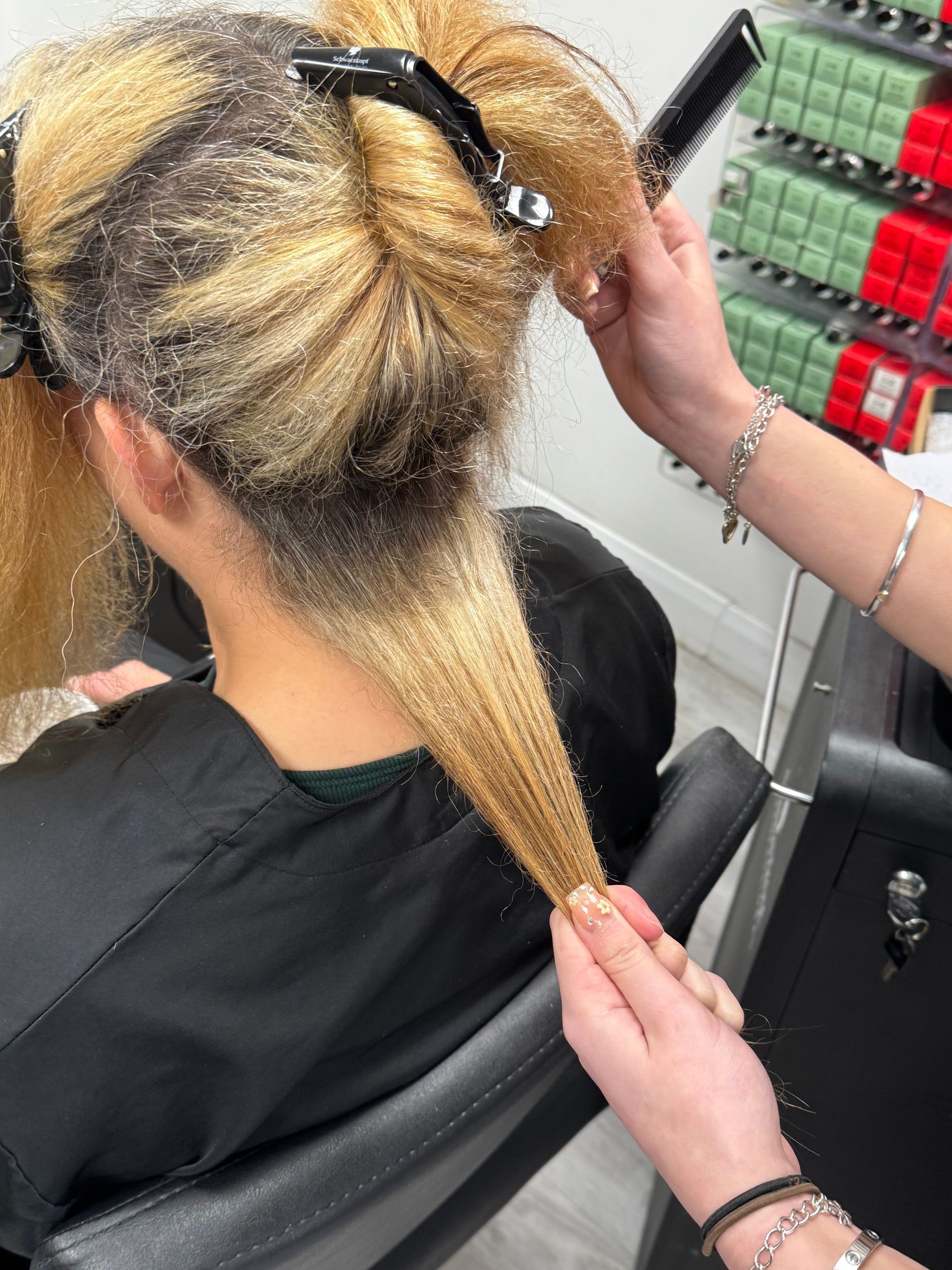
Hair can look well cared for while still having weakened areas from previous colour, lightening or heat styling.
That does not mean smooth, shiny hair is hiding a problem. It means appearance is only one part of the assessment, especially before a chemical service.
Why Appearance Does Not Tell the Whole Story
A fresh blow-dry or conditioning product can improve smoothness and shine. Those benefits do not, by themselves, establish how much further chemical processing the hair can tolerate.
Two people with similar-looking hair may have different colour histories and need different approaches.
Before recommending a service, we consider what has been applied previously, how the hair feels and behaves, and whether further assessment or testing is needed.
What We Look at During a Consultation
Your hair history matters alongside its current appearance.
We discuss:
- previous colour, lightening and other chemical treatments
- your washing and heat-styling routine
- any breakage, tangling or changes you have noticed
- differences between your roots, mid-lengths and ends
- the result you would like to achieve
This helps us build a fuller picture rather than relying on shine or softness alone.

How SalonLab Supports Our Assessment
We use the SalonLab Smart Analyzer to add information to the consultation.
Its near-infrared technology assesses aspects of the hair’s internal condition. We consider the results alongside your hair history and our professional assessment when discussing services and homecare.
The analysis supports our judgement. It does not replace it.
An analysis score is also not a guarantee that a particular lightening service is suitable or that every section of hair will respond in the same way.

Why Strand Testing May Still Be Needed
Hair analysis and strand testing answer different questions.
Analysis provides information about hair condition. A strand test helps us observe how a selected section responds to a proposed colour formulation.
Where needed, this gives us additional information before deciding whether to proceed, adjust the plan or recommend an alternative.
Hair that looks smooth—or has a reassuring analysis result—may still respond unexpectedly during a strand test.
Why This Matters Before a Colour Change
Understanding the starting condition is particularly useful when planning:
- lightening
- colour correction
- work over previously coloured lengths
- a substantial change in colour
Your preferred result may be achievable in one appointment, may need several stages, or may need adapting.
The purpose of assessment is to explain those possibilities before the service, rather than assume that healthy-looking hair can tolerate any colour change.
Choosing Care for the Right Concern
Softness, manageability and suitability for further chemical work are different considerations.
A treatment that improves how your hair feels does not automatically make it suitable for more lightening.
We consider what you are noticing, the condition of your hair and what the proposed treatment is intended to achieve. The recommendation may involve homecare, a salon treatment, a trim or changes to future colour services.
If dryness is your main concern, read our guide to why your hair still feels dry after a treatment.
What Healthy-Looking Hair Can Tell Us
Appearance is useful information, but it is not the whole assessment.
We combine what we can see and feel with your hair history, analysis and testing where appropriate. This helps us explain the options and limitations of the proposed service.
The aim is a plan based on your hair’s starting point, rather than its appearance alone.
If You Are Unsure About Your Hair Condition
You do not need to decide for yourself whether your hair needs a treatment or is ready for a colour change.
Bring your concerns and colour history to a consultation. We can assess your hair, explain any testing needed and discuss an appropriate next step.