Why Your Hair Still Feels Dry After a Treatment
Updated 7 October 2026
If your hair still feels dry or rough after a treatment, it can be disappointing. You may notice some improvement, but the ends still feel different from the rest of your hair.
This does not automatically mean the treatment failed. The result depends on the treatment used, the starting condition of your hair and how it is cared for afterwards.
The next step is to understand what remains a concern before choosing another treatment.
What Can a Hair Treatment Achieve?
“Hair treatment” covers different products and services. Some focus on softness and manageability, while others are designed for particular concerns in chemically treated hair.
A treatment may improve how your hair feels without returning it to its original condition.
Before a service, it helps to discuss:
- what the treatment is intended to do
- what improvement is realistic
- what it cannot change
- how to maintain the result at home
Smoother-feeling hair and the complete reversal of damage are different expectations.
Dryness and Damage Can Overlap
Hair that feels dry is not necessarily severely damaged. Equally, damaged hair can feel smoother after conditioning while remaining fragile.
Roughness, tangling and brittleness can overlap, so touch alone does not tell the whole story.
Your colour history, styling routine and the way your hair behaves all help us assess what care may be appropriate.
Why Colour History and Heat Matter
Previous lightening, chemical treatments and frequent heat styling can affect the condition of your hair.
A treatment may improve manageability, but your everyday routine still matters. Continuing with frequent high heat or overlapping chemical services can work against the improvement you are trying to achieve.
Tell us about previous services and the tools and products you use at home. This helps us make recommendations that fit your hair and routine.
Why the Ends May Still Feel Rough
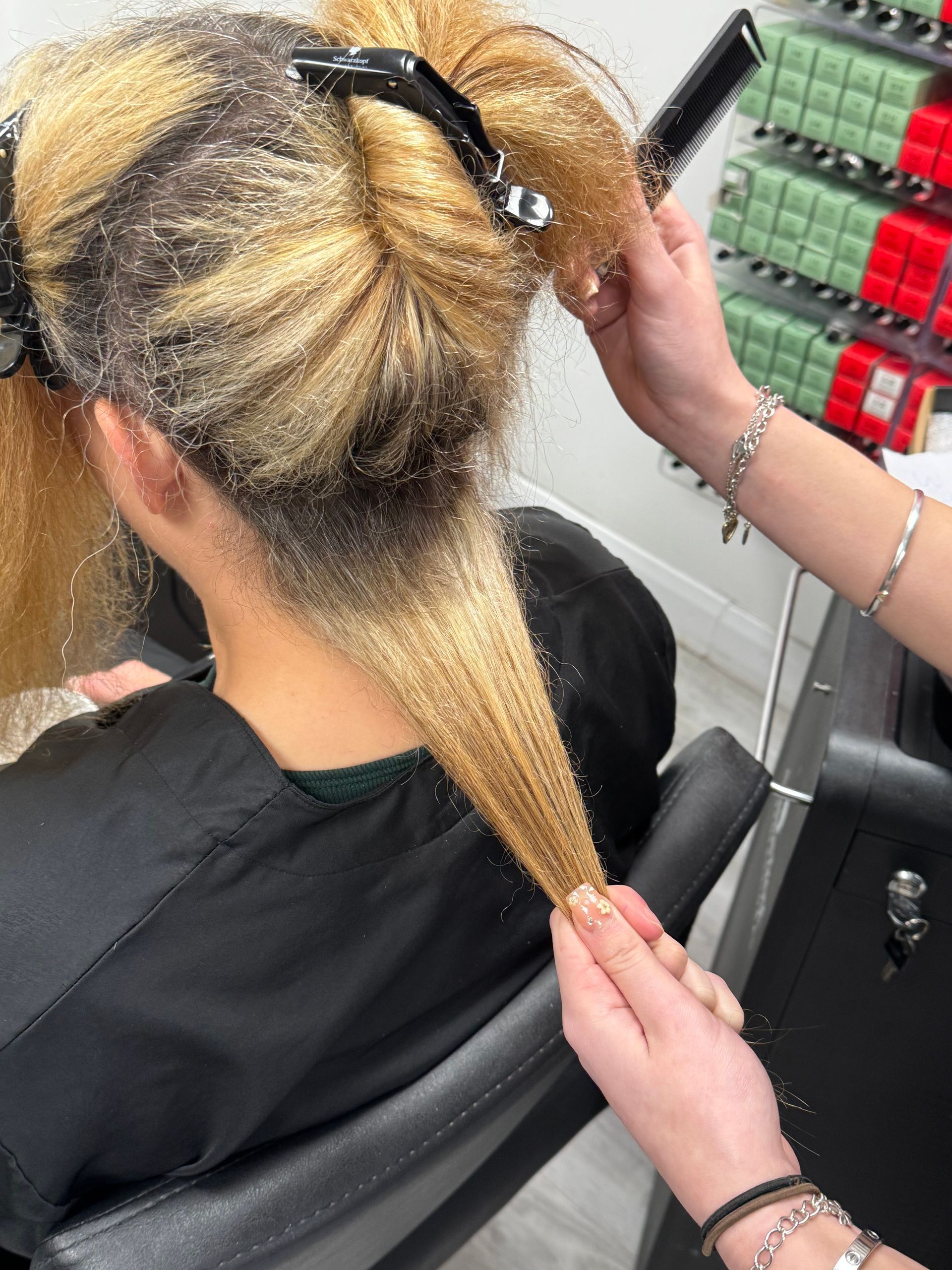
Your ends are older than the hair nearer your scalp. They have had longer exposure to washing, brushing, styling and any previous colour services.
This can explain why the roots and mid-lengths feel improved while the ends remain difficult to manage.
Conditioning can help with softness and tangling, but it cannot remove split ends. Where ends are severely worn or split, a trim may be more useful than another treatment.
Do You Need Another Treatment?
Not necessarily.
Before booking again, it is worth reviewing:
- whether the first treatment addressed your main concern
- whether it produced any improvement
- how you are washing, conditioning and styling your hair
- whether the roughness affects the whole head or mainly the ends
- whether a trim or a change in routine would be more appropriate
Some hair benefits from ongoing treatment support. In other cases, the better next step is to adjust homecare, reduce heat or reconsider planned chemical services.
The recommendation should follow the assessment.
What You Can Do Between Appointments
A manageable routine can help maintain the benefits of your salon service.
- Use conditioner after shampooing.
- Follow the product’s instructions for application and rinsing.
- Detangle gently rather than pulling through knots.
- Reduce the temperature and frequency of heat styling.
- Use a suitable heat-protection product when styling with heat.
- Ask whether a leave-in conditioner would suit your hair.
Adding more products is not always necessary. Understanding which products to use, where to apply them and how often is more useful than building a complicated routine.
Explore recommended aftercare products →
How We Assess Hair That Still Feels Dry
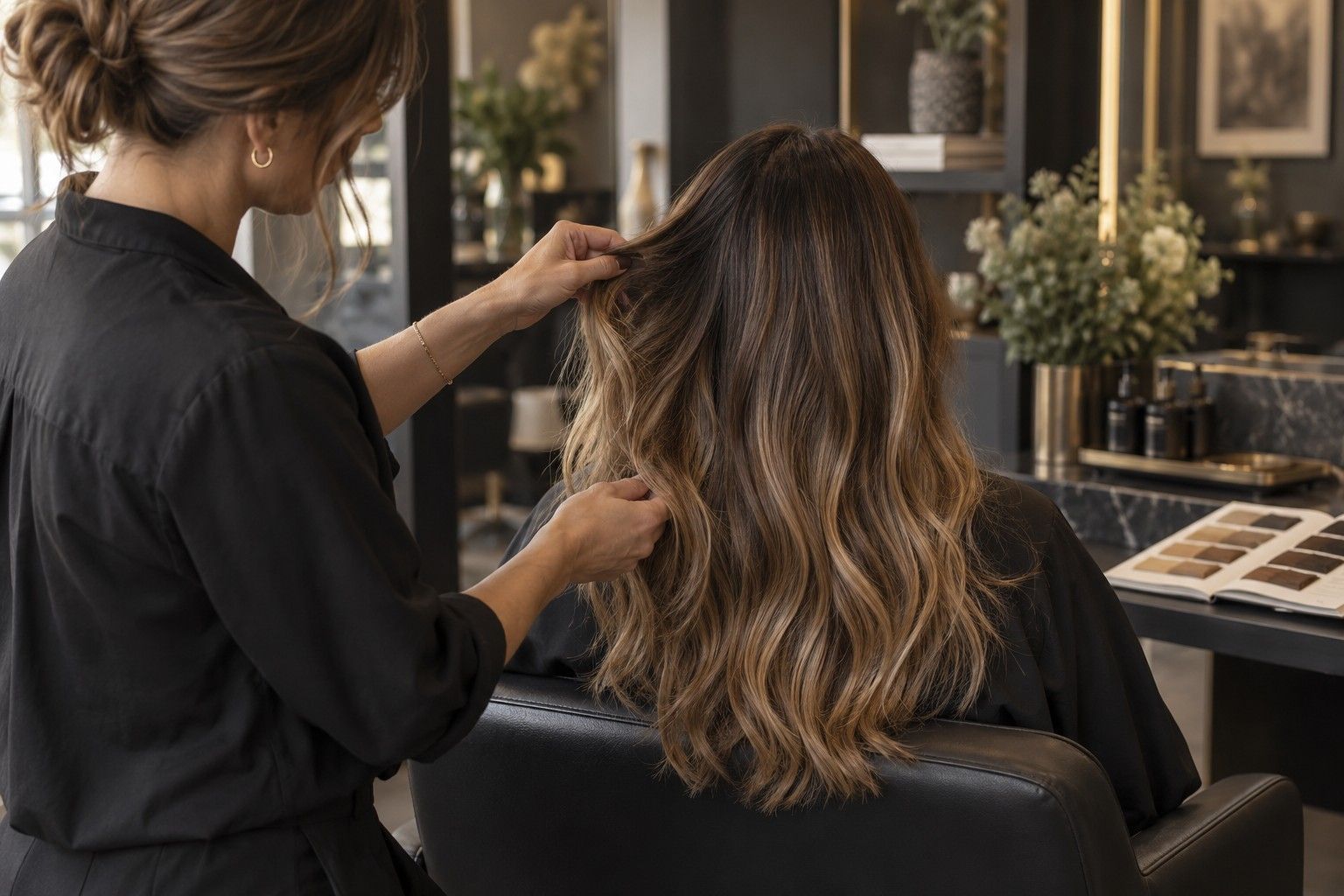
We begin with a structured consultation to discuss what you are noticing and what has already been tried.
We consider:
- your current hair condition
- previous colour and chemical treatments
- the treatment you received and its intended purpose
- your washing and styling routine
- the improvement you would like to achieve
From there, we can explain whether treatment, homecare changes, a trim or a combination of approaches is appropriate.
If Your Hair Still Feels Dry
You do not need to keep trying treatments without understanding what your hair needs.
Tell us which areas feel rough, when you notice it most and whether anything has changed since your last service. That gives us a useful starting point for discussing your options.
Begin With A Consultation →