Why Your Hair Colour Fades So Quickly
Hair colour fading quickly is one of the most common frustrations.
The assumption is often that the colour wasn’t done properly.
In reality, fading is usually the result of what is happening within the hair itself.
Why Hair Colour Fades
Hair colour does not sit on the surface.
It is held within the structure of the hair, and that structure determines how well colour stays.
When the hair is compromised, colour cannot anchor properly.
This leads to faster fading, dullness, and uneven tone.
What Causes Colour To Fade Quickly
Several factors influence how long colour lasts:
- hair porosity
- previous colour history
- the condition of the hair
- how the hair is maintained
Repeated at-home colouring can create uneven porosity and unpredictable fading.
We explore this further in our guide to whether box dye is bad for your hair.
Hair that has been repeatedly coloured, lightened, or exposed to heat often becomes more porous.
The condition of the hair directly affects how well colour can hold.
We explain this further in our guide to whether you can go blonde without damaging your hair.
Porous hair struggles to retain colour evenly.
If your hair feels dry or doesn’t hold colour well, this is often linked to the underlying condition of the hair.
Hair that appears healthy can still have underlying weakness or porosity that affects how colour holds.
Why Expectations Often Go Wrong
Many people expect their colour to look the same weeks after their appointment.
This expectation is usually based on seeing freshly finished results rather than how colour behaves over time.
Different tones also fade at different rates.
Blonde tones in particular can lose their balance and shift warmer over time.
We explain this further in our guide to why blonde hair turns brassy.
Maintaining tone is part of keeping colour looking consistent between appointments.
We cover this in our guide to how often you should tone your hair.
Blonde, copper, and softer tonal work naturally require more maintenance.
How Colour Longevity Should Be Approached
Longevity is not just about the colour itself.
This begins with understanding the condition of the hair and what it can realistically hold.
This is why every service starts with a consultation.
It is about preparing the hair properly, applying colour in a controlled way, and maintaining it correctly afterwards.
In many cases, improving the condition of the hair is what allows colour to last longer.
Why Fixing Hair Colour Isn’t a Simple Price
Every correction is different.
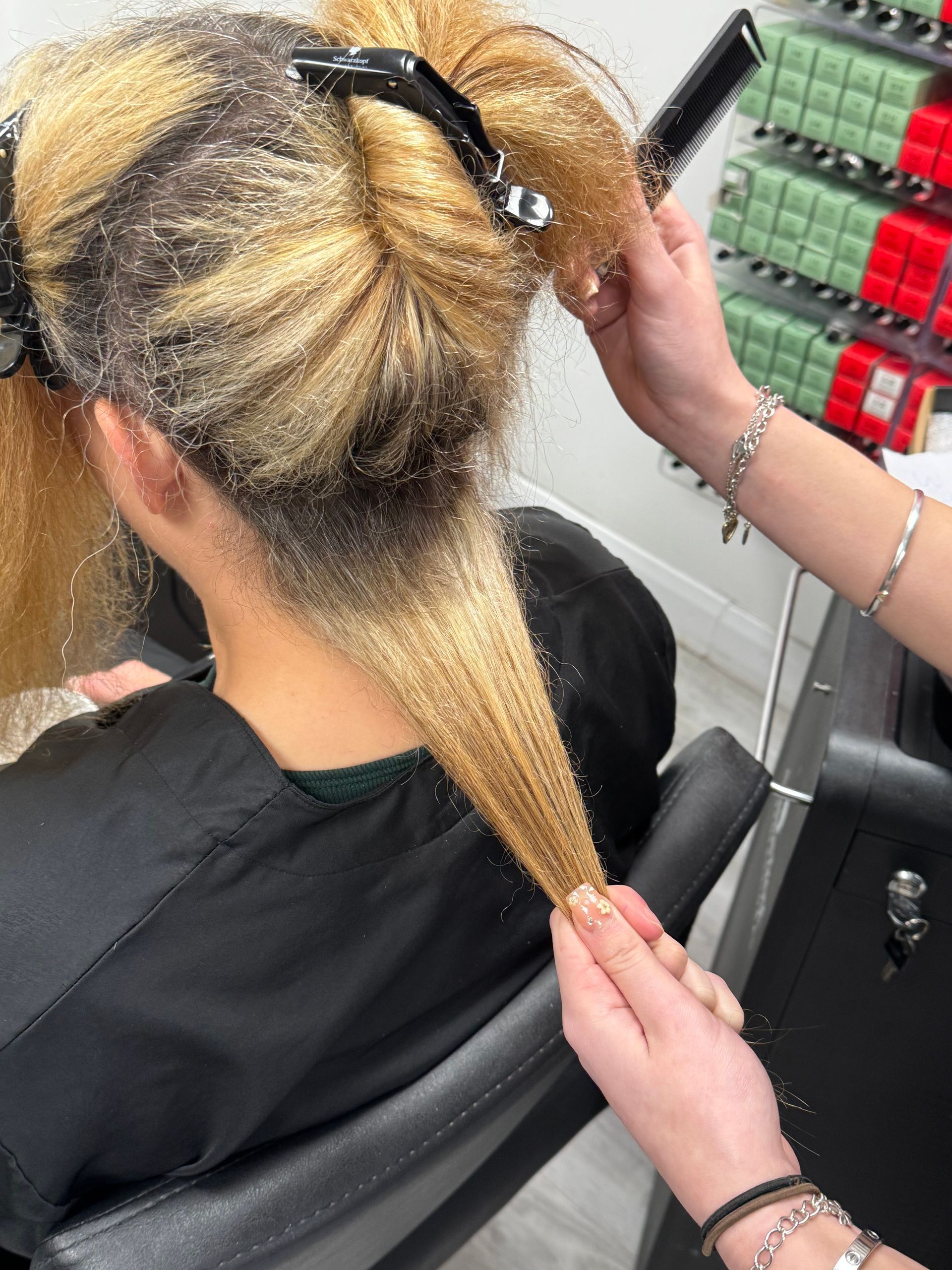
When fading leads to uneven or dull results, correction work may be required.
We explain this further in our guide to how much it costs to fix bad hair colour.
Hair history matters. Condition affects what is possible. Some results require more than one session.
Correcting faded or uneven colour is not always a single appointment process.
We explain this further in our guide to how long colour correction takes.
Two clients experiencing fading may require completely different approaches.
This is why consultation is essential before any corrective work begins.
Maintaining tone between appointments requires the correct aftercare.
Explore recommended aftercare products →
The Truth
If your hair colour fades quickly, the issue is rarely just the colour.
It is usually the condition of the hair and how it has been treated over time.
Improving how the hair holds colour requires a considered approach — not a quick fix.
Begin with a consultation.