Why Blonde Hair Turns Brassy (And How To Prevent It)
Why Blonde Hair Turns Brassy
Blonde hair turning brassy is one of the most common frustrations clients experience.
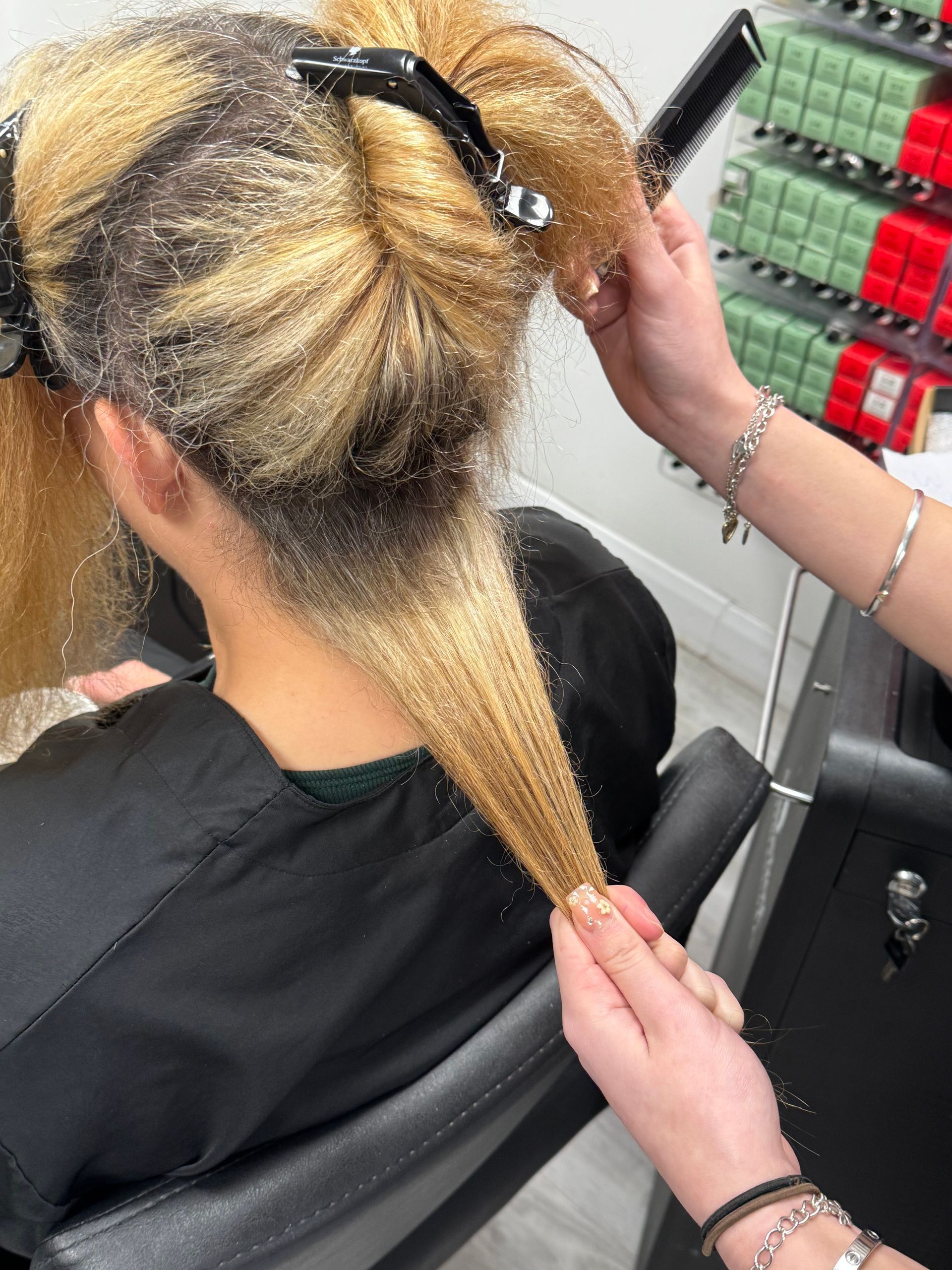
What starts as a clean, bright blonde can quickly shift to warm, yellow or orange tones.
This doesn’t happen randomly — it happens for specific, predictable reasons.
The Science Behind Brassiness
All hair has underlying warm pigment.
When hair is lightened, those warm tones are exposed:
- Yellow at lighter levels
- Orange at darker blonde levels
If these tones are not properly neutralised, they become visible over time.
Uneven underlying colour — often caused by previous at-home dye — can make brassiness more difficult to control.
This is explained further in our guide to whether box dye is bad for your hair.
Why Brassiness Comes Back
Even after a professional colour, brassiness can return.
This is usually caused by:
- washing frequency
- water quality
- heat styling
- incorrect home care
Without proper maintenance, the tone will gradually fade and warmth will reappear.
Maintaining tone isn’t just about correcting brassiness — it also depends on how often your hair is properly toned.
You can read more about this in our guide to how often you should tone your hair.
Why Fixing Brassiness Isn’t Always a Quick Fix
Brassiness might seem like a simple issue, but correcting it properly depends on several factors:
- Every correction is different depending on the level of warmth
- Hair history affects how toner and colour behave
- Hair condition influences how well tone holds
- Multiple sessions may be needed if the underlying lift isn’t correct
This is why repeated quick fixes often don’t solve the root problem.
Why This Links Back to Consultation
Brassiness is often the result of unrealistic expectations or an incomplete plan.
This is why consultation matters.
A proper consultation explains:
- what tone is achievable
- how long it will last
- what maintenance is required
This is also why many colour results don’t match expectations in the first place.
This is why many hair consultations fail before the colour process even begins.
How To Prevent Brassiness
Preventing brassiness is not about a single product.
It requires a controlled approach:
- correct lightening level
- precise toning
- appropriate aftercare
- realistic maintenance plan
When these are aligned, the result lasts longer and fades more predictably.
How the hair is lightened in the first place also affects how it holds tone over time.
We explain this in more detail in our guide to going blonde without damaging your hair.
If the starting point is uneven, correcting the colour may involve multiple stages.
This is explained further in our guide to how much it costs to fix bad hair colour.
The Truth About Blonde Hair Maintenance
Blonde hair is not a one-time result.
It is an ongoing process.
Maintaining the tone requires:
- regular toning
- correct product use
- realistic expectations
When approached properly, blonde hair stays cleaner, brighter, and healthier over time.