Can You Go Blonde Without Damaging Your Hair?
Can You Go Blonde Without Damaging Your Hair
Going blonde is often associated with damage.
Dryness, breakage, and loss of condition are common concerns — and in many cases, they’re justified.
But damage isn’t caused by blonde hair itself.
It’s caused by how the process is approached.
Why Damage Happens
Lightening changes the structure of the hair.
If it’s done too aggressively, too quickly, or without considering the starting condition, the hair becomes compromised.
This is where most problems begin.
This is also why blonde hair can become difficult to maintain over time if the process is not controlled.
This is explained in more detail in our guide to why blonde hair turns brassy.
Previous colour — especially box dye — can significantly affect how the hair responds to lightening.
This is explored further in our guide to whether box dye is bad for your hair.
Why It’s Not Just About the Product
No product can completely prevent damage if the process is wrong.
The outcome depends on:
- how much lift is attempted
- how quickly it’s done
- the condition of the hair beforehand
Without control, the hair will always suffer.
Why Going Blonde Safely Requires a Process
- Achieving blonde hair while maintaining condition is rarely a single-step process.
- Every transformation is different depending on the starting point
- Hair history plays a major role in how safely hair can be lightened
- Hair condition determines how far the process can go
- Multiple sessions are often required to protect the integrity of the hair
This is why rushing blonde transformations often leads to damage.
Correcting previous colour can also affect the overall time and cost involved.
We explain this further in our guide to how much it costs to fix bad hair colour.
The Role of Consultation
This is where everything should be decided.
A proper consultation determines:
- whether your hair can safely go blonde
- how many stages are required
- what the realistic end result is
This is why many hair consultations fail before the process even begins.
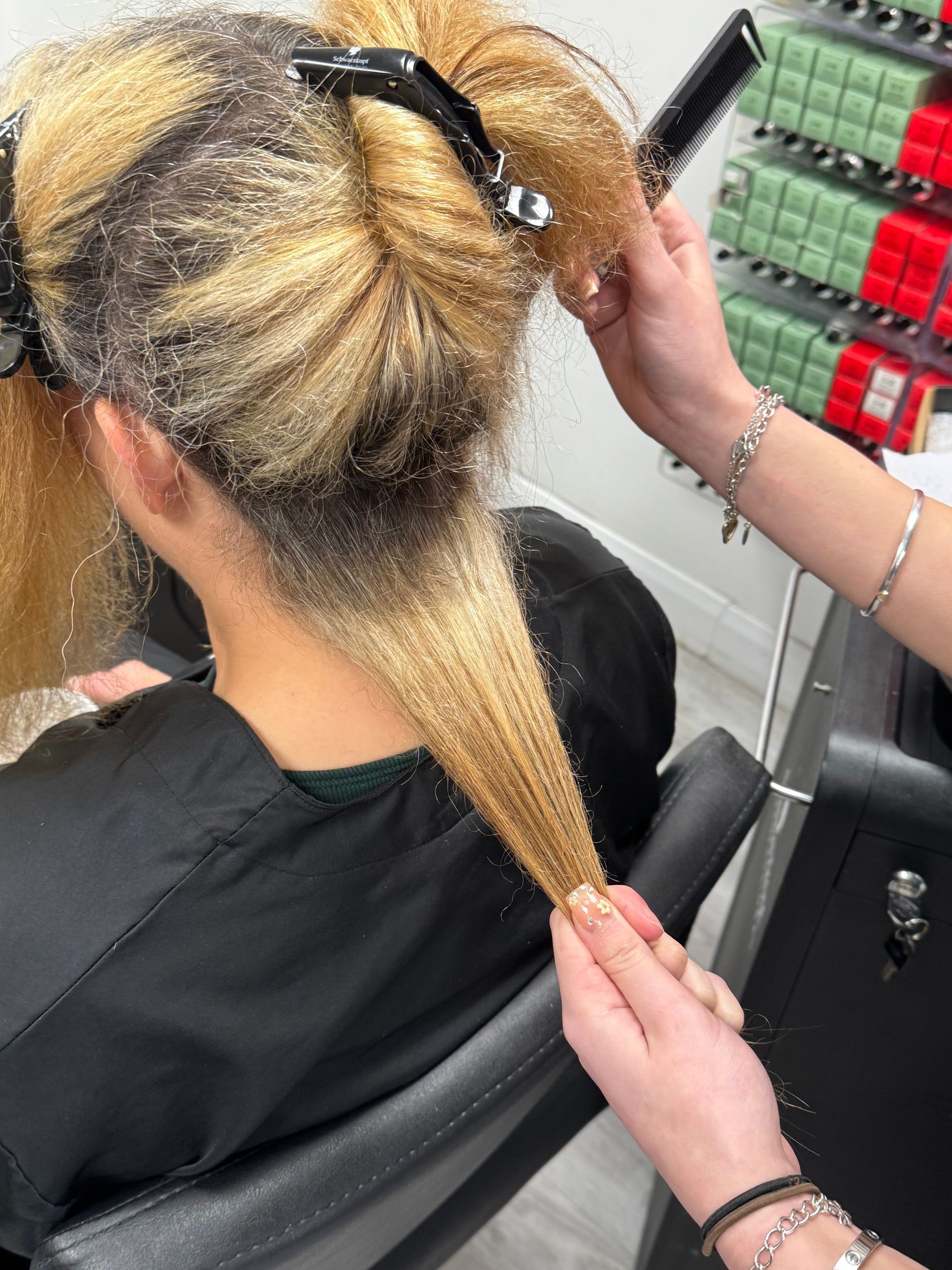
Hair may look healthy on the surface, but internal condition still needs to be assessed before lightening.
A Controlled Approach to Blonde Hair
Going blonde safely is about control, not speed.
In many cases, it requires:
- gradual lightening
- multiple appointments
- careful monitoring of hair condition
When approached this way, the hair remains stronger and the result is more consistent.
Even with the right approach, maintaining the condition of the hair after lightening is key.
The Truth About Going Blonde
Blonde hair doesn’t have to mean damaged hair.
But it does require:
- planning
- patience
- and a structured approach
Without that, damage is almost inevitable.
Maintaining condition and tone is part of the same long-term approach.
This is explored further in our guide to how often you should tone your hair.
Maintaining tone between appointments requires the correct aftercare.
Explore recommended aftercare products →